Six-Legged Mythical Dragon Model: A Unique Addition to Your 3D Collection
The Six-Legged Mythical Dragon Model from Velvet Sparrow studio offers a distinctive approach to 3D modeling, blending traditional dragon imagery with an unconventional six-legged design. This model is ideal for creators looking to add a unique and striking piece to their collection, whether for display, gaming, or artistic exploration. Its balanced stance and detailed textures make it a standout option among fantasy creature models.
What Makes the Six-Legged Mythical Dragon Model Distinct?
The Six-Legged Mythical Dragon Model stands out due to its innovative design. Unlike traditional dragons that typically have four legs, this model features six, offering a more stable and dramatic pose. The additional limbs contribute to a sense of power and presence, making it visually compelling for both static displays and dynamic scenes.
Designed with attention to detail, the model includes rich sculpted textures on wings, horns, and scales. These elements enhance realism and provide a strong foundation for customization. Whether you plan to paint the model or leave it in its raw form, the level of detail ensures a high-quality result.
The model is also beginner-friendly, with a design that prints cleanly with minimal supports. This makes it accessible to those new to 3D printing while still appealing to experienced users who appreciate precision and quality.
Comparing the Six-Legged Mythical Dragon Model to Other Options
When considering 3D models of mythical creatures, the Six-Legged Mythical Dragon Model offers a different approach compared to standard four-legged designs. Traditional dragon models often prioritize movement and agility, while this six-legged variant focuses on stability and visual impact. This distinction can influence which model suits your specific needs.
For example, if you're creating a tabletop game scene, a four-legged dragon might be more suitable for depicting action or flight. However, if your goal is to create a centerpiece for a shelf or display case, the six-legged model’s balanced stance and dramatic appearance could be more effective.
In terms of compatibility, the Six-Legged Mythical Dragon Model works with both resin and filament printers, making it versatile across different printing technologies. This flexibility is a key advantage over some other models that may require specific materials or settings.
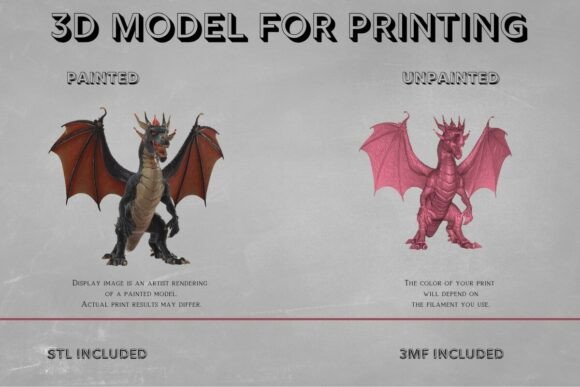
Additionally, the model includes both STL and 3MF file formats, ensuring compatibility with a wide range of slicing software. This is particularly useful for users who work with different platforms or prefer optimized slicing performance.
Strengths and Tradeoffs of the Six-Legged Mythical Dragon Model
One of the main strengths of the Six-Legged Mythical Dragon Model is its ease of printing. With light or no supports needed depending on orientation, it reduces the complexity of the printing process. This is especially beneficial for users with limited experience or less advanced equipment.
The model’s design also allows for creative freedom. Since it comes with painted and unpainted reference previews, users can choose to paint it themselves or use it as a base for custom color schemes. This adaptability makes it a good choice for artists and hobbyists who enjoy personalizing their creations.
However, there are tradeoffs to consider. The six-legged design may not appeal to everyone, particularly those who prefer more traditional dragon representations. Additionally, while the model is beginner-friendly, achieving the best results still requires some understanding of printing settings and material choices.
Another consideration is the scale. The model is recommended for medium-scale printing, between 12–18 cm in height. This size is ideal for display but may not be suitable for projects requiring smaller or larger dimensions.
Best Fit Situations for the Six-Legged Mythical Dragon Model
The Six-Legged Mythical Dragon Model is well-suited for a variety of applications. If you’re looking to add a bold statement piece to your collection, this model provides a unique and eye-catching option. Its stability and balance make it ideal for shelf displays or as part of a larger diorama.
For tabletop gaming, the model can serve as a powerful centerpiece or enemy mini-figure. Its detailed textures and sturdy build allow it to stand out in a game setting, enhancing the visual storytelling aspect of your sessions.
If you're a hobbyist interested in 3D printing, this model offers a rewarding project that balances complexity with accessibility. It’s a great way to practice printing techniques while creating something visually impressive.
When to Consider Alternatives
While the Six-Legged Mythical Dragon Model has many advantages, there may be situations where another option is more appropriate. For instance, if you’re looking for a dragon model that emphasizes speed or mobility, a four-legged design might be better suited to your needs.
Additionally, if you prefer a more stylized or abstract representation of a dragon, you may find other models more appealing. Some designs focus on artistic flair rather than realistic anatomy, which could align better with your creative goals.
For users working with very small or very large scales, the recommended size of 12–18 cm may not fit your project. In such cases, exploring other models that offer different dimensions could be more practical.
Realistic Examples and Practical Comparisons
Consider a scenario where you're building a fantasy-themed room display. The Six-Legged Mythical Dragon Model would make a strong focal point, adding a sense of grandeur and mystique. Its six legs and detailed textures would complement other elements like miniature landscapes or fantasy props.
In contrast, if you're designing a role-playing game map, a four-legged dragon model might be more versatile for positioning in different environments. It could be placed in flight, standing, or in motion, offering greater flexibility for gameplay scenarios.
Another example involves a 3D printing workshop. If the goal is to demonstrate the capabilities of a printer, the Six-Legged Mythical Dragon Model would showcase the machine’s ability to handle complex geometries with minimal support structures. However, if the focus is on testing different materials, a simpler model might be more efficient for comparison purposes.
Conclusion: Making an Informed Choice
The Six-Legged Mythical Dragon Model from Velvet Sparrow studio presents a compelling option for creators seeking a unique and visually striking 3D model. Its six-legged design, detailed textures, and beginner-friendly printing requirements make it a versatile choice for various applications.
By understanding its strengths and limitations, you can determine whether it aligns with your specific needs. Whether you're a hobbyist, artist, or gamer, the model offers a valuable addition to your creative toolkit. As with any product, evaluating your goals and preferences will help ensure the best possible outcome.